Signature sequel feature
Buggies
Persistent rideable insect companions can fight, gather, haul, build, traverse and specialise. Five Buggy types are live on the current branch.
Explore Buggies ↓Grounded 2 is no longer defined by one headline addition. Buggies change travel, combat and logistics; Brookhollow Park keeps opening into new kinds of space; underwater exploration has become a full progression layer; bases reward both utility and expression; co-op can persist across sessions; and Playgrounds lets players build experiences outside the survival campaign.
Reviewed state: live version 0.5.1 · Into the Abyss / 0.5 is the latest major content update · feature evidence rechecked 25 September 2026.
The useful way to understand Grounded 2 is not as a checklist of isolated mechanics. Its defining features repeatedly change the same player problems: how you cross the park, what you can bring home, where you can survive, how you prepare for a fight and how a group turns dangerous territory into familiar territory.
Persistent rideable insect companions can fight, gather, haul, build, traverse and specialise. Five Buggy types are live on the current branch.
Explore Buggies ↓A municipal park turned into a multi-layer survival space spanning public landmarks, anthills, hidden Ominent infrastructure, gardens and deep water.
Explore the park ↓Swimming 2.0, diving progression, underwater combat, harvesting, bases and an amphibious Buggy make the Pond a substantial play layer rather than a side activity.
Go underwater ↓BUILD.M, utility infrastructure, Coziness rewards and underwater construction let bases become workshops, transport hubs and homes.
Explore building ↓Brainpower, Milk Molars, tools, equipment, mutations, Buggies and region-specific unlocks progress in parallel rather than through one character level.
Explore progression ↓Online co-op, cross-platform play and Shared Worlds support a persistent group survival experience across Xbox, PC and PlayStation.
Explore co-op ↓Logic tools, custom encounters, community sharing and Buggy Racing let players build experiences that can diverge sharply from Survival Mode.
Explore creator tools ↓Stranger heat, O.R.C. retaliation, repeatable MIX.R activity and O.R.C. Beacons add repeatable player-driven pressure beyond fixed story encounters.
See reactive systems ↓This page focuses on what the player can do and why it matters.
Detailed system relationships, progression chains and mechanical boundaries live on the specialist systems page.
Planned features appear here only to stop future intent being mistaken for current functionality.
Grounded 2 turns insects into persistent partners that can sit inside several parts of the survival loop at once. A Buggy can be transport, storage, gathering help, combat support, a traversal key and something the player actively develops over time.
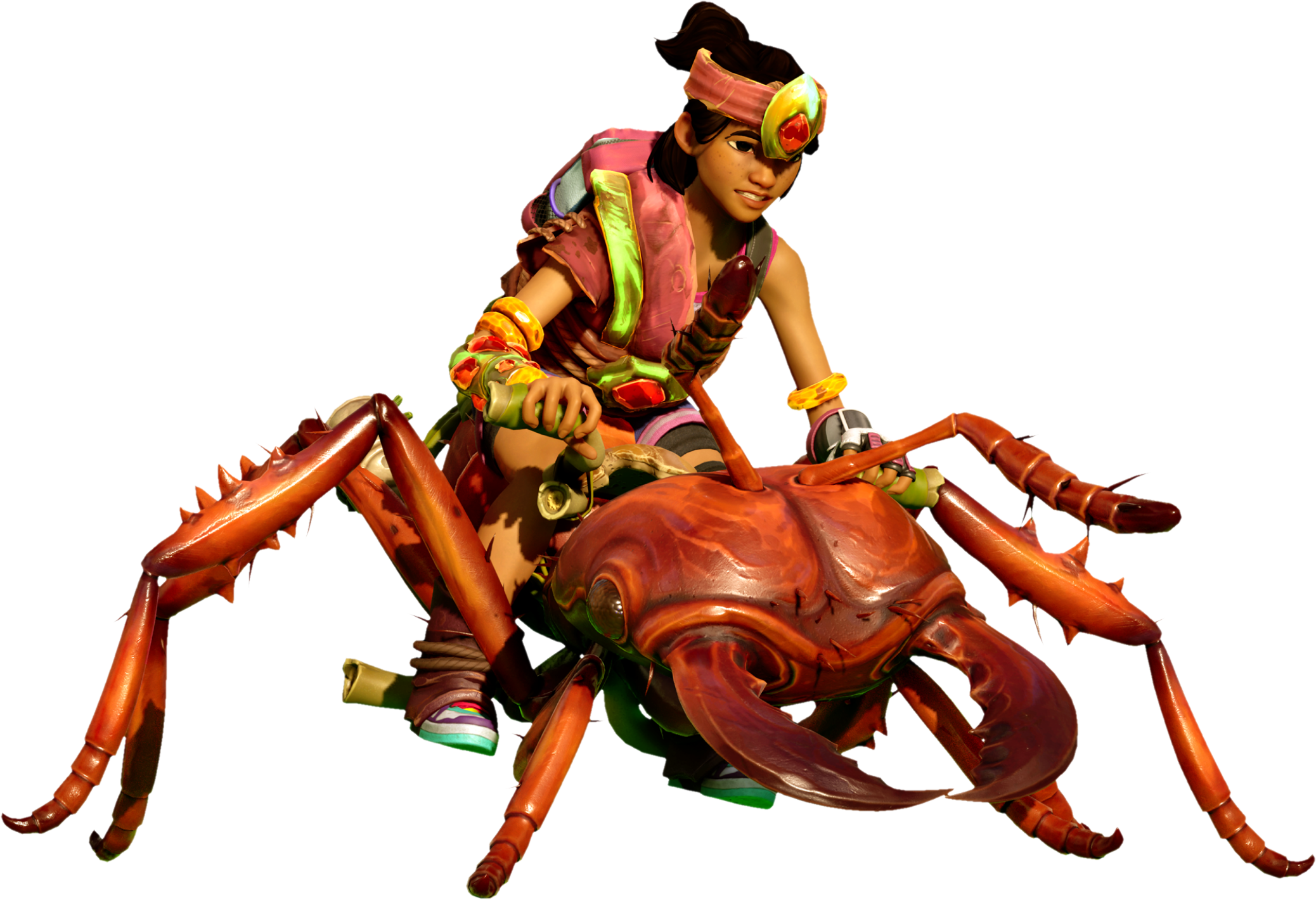
In the original on-foot survival loop, distance creates friction: resources need carrying, hostile creatures interrupt travel, building materials need moving and a long route home can dominate the expedition. Grounded 2's Buggies attack several of those problems together. The Red Soldier Ant can gather and haul, different companions support different fights, and the Toe Biter extends the entire companion idea into water. [S38] [S13] [S06]
That is why “mount” is too narrow a description. The launch design explicitly supports fighting while mounted and dismounting so the Buggy continues as a companion, while later updates add shared Buggy progression, mutations and tier-upgrade infrastructure. [S38] [S40]
Fights, gathers, carries inventory and can support building. Launch material also gives it useful route interactions around ant spaces and obstacles. [S38]
A faster combat-focused Buggy built around web/control behaviour; later updates also give it a gliding movement capability. [S38] [S40]
A durable support Buggy with healing, ram and water-based utility, giving the roster a defensive identity rather than another speed upgrade. [S20]
A later ant-family option with its own combat and utility identity; the progression system is designed so an earlier ant does not automatically become obsolete. [S21] [S42]
Works on land and in water, carrying the companion system directly into the Into the Abyss exploration loop. [S06]
Moldy Milk Molars provide shared Buggy progression, Buggy mutations add specialisation, and the Buffin' Barrel can raise a Buggy to a higher tier. Obsidian has explicitly framed the system as a way to keep earlier companions useful as the park expands. [S40] [S42]
Buggy inventory, Hotpouch access, hauling and hot-deposit support mean a companion can shorten the repeated base-to-resource shuttle rather than merely shorten travel time. [S34] [S13]
The current roster is Red Soldier Ant, Orb Weaver, Ladybug, Black Soldier Ant and Toe Biter. The Potato Beetle Buggy is on the Fall roadmap and is not part of the live roster yet. Other community-requested or datamined Buggy ideas are not current features. [S04]
The sequel's world expansion is not only about a larger footprint. Surface landmarks, garden interiors, anthills, hidden Ominent facilities and the Pond/Abyss branch ask for different forms of preparation, movement and equipment.
Entrances, snackbar structures, a statue, ceremony grounds, garden areas, a picnic table and the Pond give the player large visual anchors while becoming enormous spaces at insect scale. [S12]
Toxic Tangle added Garden Patch spaces such as Croquet Court, Veggie Garden, Greenhouse and Pumpkin Patch, alongside new creatures, the Ladybug Buggy and Tang corruption affecting parts of the environment and creature ecology. [S20]
Beat the Heat showed that a major expansion can create depth inside the existing park footprint through a substantial anthill environment rather than only extending the edge of the map. [S21]
Into the Abyss adds Skunk Pond, The Abyss and surrounding Bayou/Mountains content, with equipment, enemies, building and traversal specifically built around water. [S06] [S45]
Public park spaces overlap with research facilities, checkpoints, archives, outposts and other hidden infrastructure, so exploration repeatedly moves between ordinary landmarks and the scientific project beneath them. World reference
Hidden Milk Molars, Critter CAPZ, research resources, data and side encounters give players reasons to leave the direct objective route. [S39]
World-scale context: at announcement, Obsidian said the initial playable Grounded 2 area was already close to the scale of the original Grounded backyard. Early Access has since added major Garden, anthill and underwater spaces on top of that starting footprint. [S12]
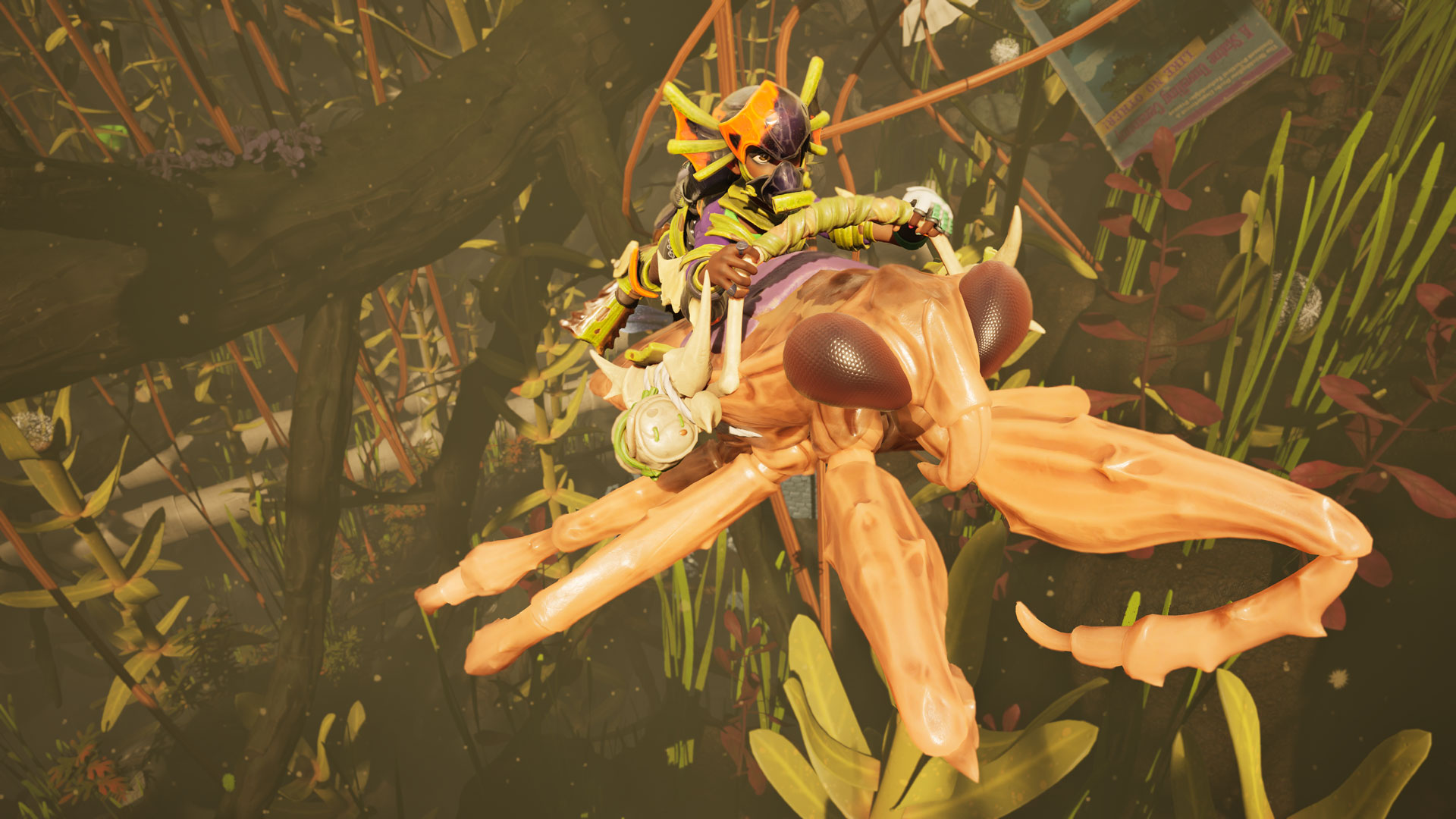
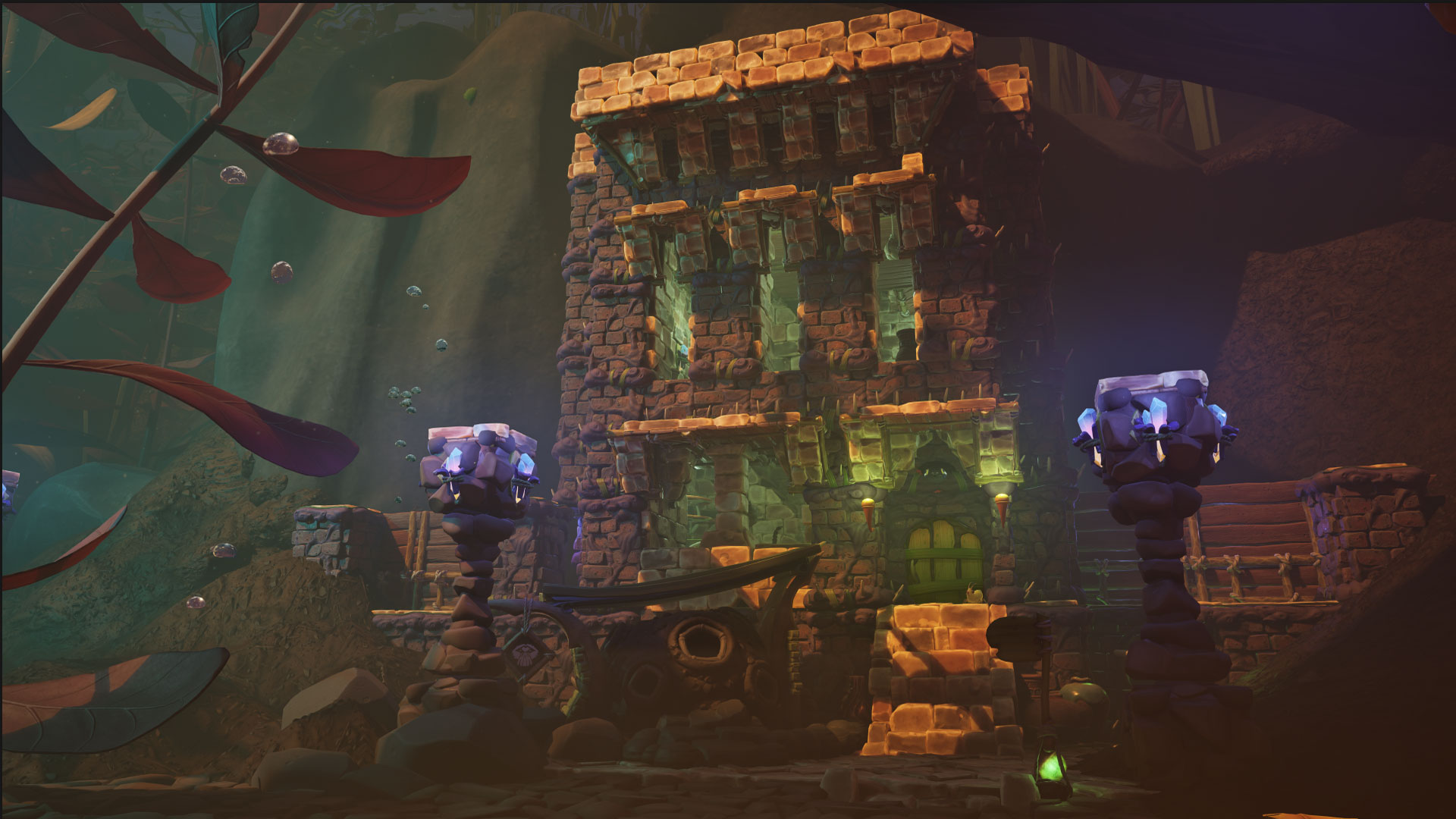
Directional Burst gives underwater movement its own evasive/traversal rhythm, while underwater lock-on acknowledges that combat needs different camera and targeting support in three-dimensional space. [S39]
Optical Discs unlock Diving Suit progression, so deeper regions are not merely open water reached by holding the swim button longer. Equipment becomes part of the exploration gate. [S06] [S39]
The Harpoon Gun, underwater mines/Croakwurst Bomb and underwater lock-on give combat an aquatic toolset rather than forcing every land weapon interaction into the Pond unchanged. [S39]
The Omni-Tool gains an underwater harvesting branch, allowing the environment to feed new recipes and capability instead of being scenery around combat encounters. [S06]
Bubble Floors create breathable spaces and Bubble Diffusers provide an underwater air-source system. Aquatic building pieces let a base become an expedition outpost inside the water layer. [S39]
The amphibious Toe Biter means the signature sequel feature does not stop at the shoreline. It works on land and in water and has its own mutation options. [S06] [S39]
Low-gravity combat/platforming and deep-water spaces make the Abyss mechanically distinct from simply swimming through the upper Pond. [S39]
Toe Biters, Diving Bell Spiders, water creatures, the Koi and later 0.5 creature/robot additions give the underwater branch its own threat and discovery profile. The Features page treats them as experience texture rather than a full bestiary. [S06] [S39]
Substantial does not mean finished: the current Year Two roadmap still lists The Abyss — Expanded under undated Future Plans. The 0.5 aquatic stack is live now, but Obsidian is explicitly signalling more Abyss work beyond the current build. [S04]
Food, water, shelter, resources and crafting remain foundational. Grounded 2's more distinctive change is how many tools now reduce the friction of finding, tracking, carrying and understanding what you need next.

Long trips cost supplies. Cooking, consumables, shelter and resource planning remain part of the rhythm, so improved logistics do not remove the survival economy; they let the player spend more attention on where to go and what to bring. [S13]
PEEP.R 2K supports first- and third-person use, zoom, a dynamic compass, Chopping List visibility and resource tracking through the Resource Finder. The player can turn “I need this material” into a searchable objective instead of relying purely on memory. [S19]
Discovering and analysing materials contributes to recipe progression. Into the Abyss explicitly adds Brainpower-exclusive recipe rewards, keeping research relevant beyond the opening hours. [S39]
Into the Abyss replaces the older crafting-menu presentation with a Recipe Menu that lets players inspect ingredients and required tools away from a workstation. That means a discovery can be turned into a gathering plan before returning home. [S39]
Inventory, mounted gathering, Hotpouch and hauling support let expeditions return more value and make larger or more distant building projects less dependent on repeated manual trips. [S13] [S34]
Molar progression expanded in 0.5.1. The patch adds upgrades across Mega Milk, Milk and Moldy Milk Molars and expands the available tiers for Milk and Moldy Milk Molars. [S51]
Regular Milk Molars, Moldy Milk Molars, Optical Discs and Critter CAPZ all reward exploration, but they feed different parts of the experience: player progression, Buggy progression, aquatic access and collection/discovery respectively. [S39] [S40]
Grounded 2 still makes the player gather resources, but increasingly separates difficulty from busywork. Information tools, portable recipe knowledge and Buggy logistics reduce repeated searching and carrying without making preparation irrelevant.
There is no single universal fast-travel answer. Buggies, fixed Ominent infrastructure, player-built routes and environment-specific swimming solve different movement problems.
| Travel feature | What the player gets | Why it feels different |
|---|---|---|
| Buggies | Freeform movement combined with combat, carrying and species-specific utility. | The vehicle is also a companion and progression target. [S38] |
| Pneumatic Transit System | Fast travel through activated Ominent infrastructure. | A fixed network that becomes more valuable as the park expands. Into the Abyss widens its reach. [S39] |
| Ziplines | Player-built repeatable routes between chosen points. | The player turns base placement and geography into personal infrastructure. [S06] |
| ZIP.R | Bidirectional zipline travel. | Reduces the one-way limitation of a gravity-led zipline network. [S39] |
| Swimming 2.0 | Responsive underwater travel, including Burst movement. | A separate movement language for the aquatic world rather than slower walking in water. [S39] |
Ziplines reward building in strategic places and make an established base part of the travel network rather than just a storage location.
Developer material gives different Buggies different traversal or environmental advantages, so companion choice can change how a route is approached. [S38]
Construction is not just a defensive shell around beds and storage. BUILD.M changes the workflow, Coziness rewards furnishing, utilities support progression and Buggies, and Into the Abyss allows genuine underwater habitation.

The 0.2 update introduced the grid-led BUILD.M workflow and continued building-placement improvements, giving construction a clearer planning interface than the earlier radial-first approach. [S34]
Furnishing a base can unlock perks, meaning decoration contributes to progression rather than existing only for screenshots. The 0.5 branch also includes a dynamic lo-fi base-music layer that changes with Coziness. [S19] [S39]
Hatchery/nest concepts, the Buggy Buff Hut and Buffin' Barrel make a developed home part of the Buggy loop rather than a parallel system that companions ignore. [S40]
Bubble Floors and Bubble Diffusers make breathable underwater construction possible, while aquatic building pieces let players stage longer exploration from inside the Pond environment. [S39]
Into the Abyss adds specialised facilities such as the Forbidden Workbench for Stranger-related items and the Glitter Bar for SCA.B 2K/Omni-Tool cosmetic customisation. [S39]
Successive updates have continued adding building materials, furniture and defensive options, reflecting Obsidian's stated decision to accelerate building work after community feedback. [S20] [S21]
Not live: Base Moving remains an undated Future Plans item on the current roadmap. Grounded 2 currently supports increasingly sophisticated persistent construction, not a general relocate-your-base feature. [S04]
Grounded 2 uses familiar archetype language, but actual playstyle comes from equipment, weapons, mutations, Buggies and the encounter itself. The result is a survival-combat layer that can change considerably without asking the player to restart as a different class.
Developer material presents these as recognisable ways to talk about combinations, not permanent character classes. Swapping equipment and mutations can change the role. [S38]
0.5.1 improves Buggy combat participation. Obsidian increased Buggy perception so they can join fights more easily with the player/Teen. The patch also fixes Buggy inventory loss, nest-destruction disablement, Toe Biter Sweep damage and summoning restrictions. [S51]
Players can fight while riding, then dismount and let the Buggy operate as a companion. Companion choice therefore affects battle as well as travel. [S38]
AXL, King Dozer, Snake Colossus and current O.G.R.R. encounters show a range from named park bosses to enhanced variants and giant environmental threats. [S34] [S20] [S21]
Underwater lock-on, Harpoon Gun and aquatic explosive tools make the deep-water combat layer deliberately different from land encounters. [S39]
Player mutations reinforce a loadout while companion mutations specialise Buggies. The systems are distinct even though both use the mutation concept. [S20] [S39]
Controlled O.R.C. creatures and genetically enhanced O.G.R.R. variants are different feature families. Both make familiar creature types behave as more than basic wildlife encounters. [S21] [S39]
Balance is still moving. Patch 0.5.0.5 reduced Mosquito/Tiger Mosquito pressure and softened the O.G.R.R. Toe Biter Leviathan; Patch 0.5.1 is now the current live build and adds a later progression/Buggy/fix pass. [S01]
Grounded 2 distributes progress across research, player upgrades, equipment, tools, Buggies, movement networks and region-specific access. That makes discovery matter because different finds improve different parts of the player's capability.
| Progression feature | Player-facing purpose | What it changes |
|---|---|---|
| Brainpower | Research/recipe progression. | Analysing discoveries can unlock more things to craft; 0.5 adds Brainpower-exclusive recipes. [S39] |
| Regular Milk Molars | Player progression found through exploration. | A separate teen-upgrade track from companion progression. [S38] |
| Moldy Milk Molars | Shared Buggy progression. | Improves the companion system rather than the teen directly. [S40] |
| Tier 4 Omni-Axe | Current recipe changed in 0.5.1. | Infused Ooze was removed and the recipe changed. The official note does not state the complete replacement recipe, so the older 0.5.0.5 Leviathan requirement is not presented as the confirmed current route. [S51] |
| Omni-Tool | Expandable harvesting capability. | Branches such as Omni-Axe and Omni-Clipper decide which materials/environmental resources can be worked. [S06] [S01] |
| Equipment & mutations | Build and environmental specialisation. | Changes combat role and, with gear like the Diving Suit, where the player can survive. [S06] |
| Optical Discs | Aquatic progression keys. | Feed the Diving Suit/deeper-Pond progression chain. [S06] |
| Critter CAPZ | Exploration/collection rewards. | Creates a discovery layer separate from power progression. [S39] |
| Raw Science | Spendable progression resource. | Still has practical uses in the current build; 0.5, for example, uses a one-time Raw Science cost when extending the Pneumatic Transit System network. [S39] |
| Transport infrastructure | World mastery. | Activated PTS routes and player-built ziplines make previously expensive journeys routine. [S39] |
Progress is often visible as a change in what the park allows you to do: harvest a resource you could not cut before, stay underwater longer, move cargo farther, survive a harder encounter or turn a distant route into an everyday commute.
Into the Abyss formalises a repeatable Mysterious Stranger/O.R.C. pressure loop. It is a specific systemic feature; it does not mean the entire park runs on one global simulation.
Into the Abyss makes MIX.R challenges repeatable and gives them a role inside the Stranger-attention economy, so the same feature can be used for combat activity and pressure management. [S39]
The Beacon converts O.R.C.-related resources into a deliberate wave encounter. It is distinct from the Stranger-linked transmission devices that contribute to the heat system. [S39]
Up to four players can play online together, and the cross-platform layer is designed around more than matchmaking: Shared Worlds, account-linked features and cross-progression support make it possible for the same group to keep returning to a persistent park.
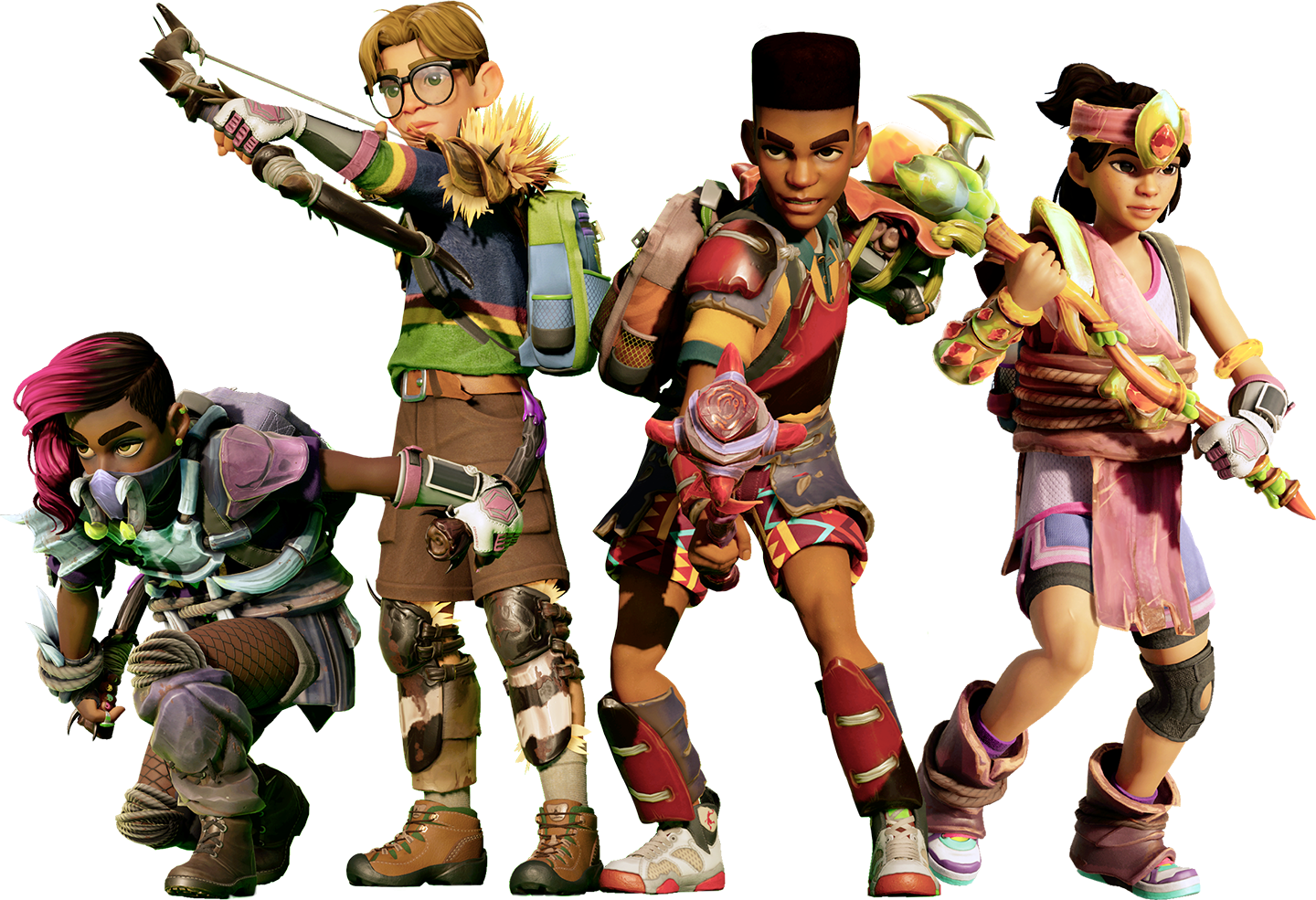
Grounded 2 supports up to four players total. Survival, building, exploration and combat can all be shared rather than being separated into a dedicated multiplayer mode. [S35]
Obsidian's current support guidance documents cross-platform multiplayer across the current ecosystems. The cross-platform functions use a linked Microsoft/Xbox account, with the relevant console online subscription still required. [S07]
Current Grounded 2 support confirms Shared Worlds across the documented cross-platform account layer. Obsidian's original first-party definition describes invited friends continuing a cloud-hosted Shared World while its owner is offline; current Grounded 2 support does not separately restate every persistence edge case. [S07] [S41]
Game Director Chris Parker says cross-progression is supported across PC, Xbox and PlayStation. Current support documentation does not spell out every save-transfer edge case, so that should not be read as a promise that every local save file can be moved manually between every platform. [S15] [S07]
For the Xbox ecosystem specifically, first-party launch/support material explicitly documents Play Anywhere and full cross-saves between Xbox console and Xbox PC. [S11]
Local/offline split-screen co-op is not supported in Obsidian’s published FAQ. Shared Worlds are also not the same thing as an independently hosted dedicated-server product. [S36]
Playgrounds exposes construction and logic tools for authored experiences, while Custom Game 1.0 changes rules around a game. They are related forms of customisation, but they solve different problems.
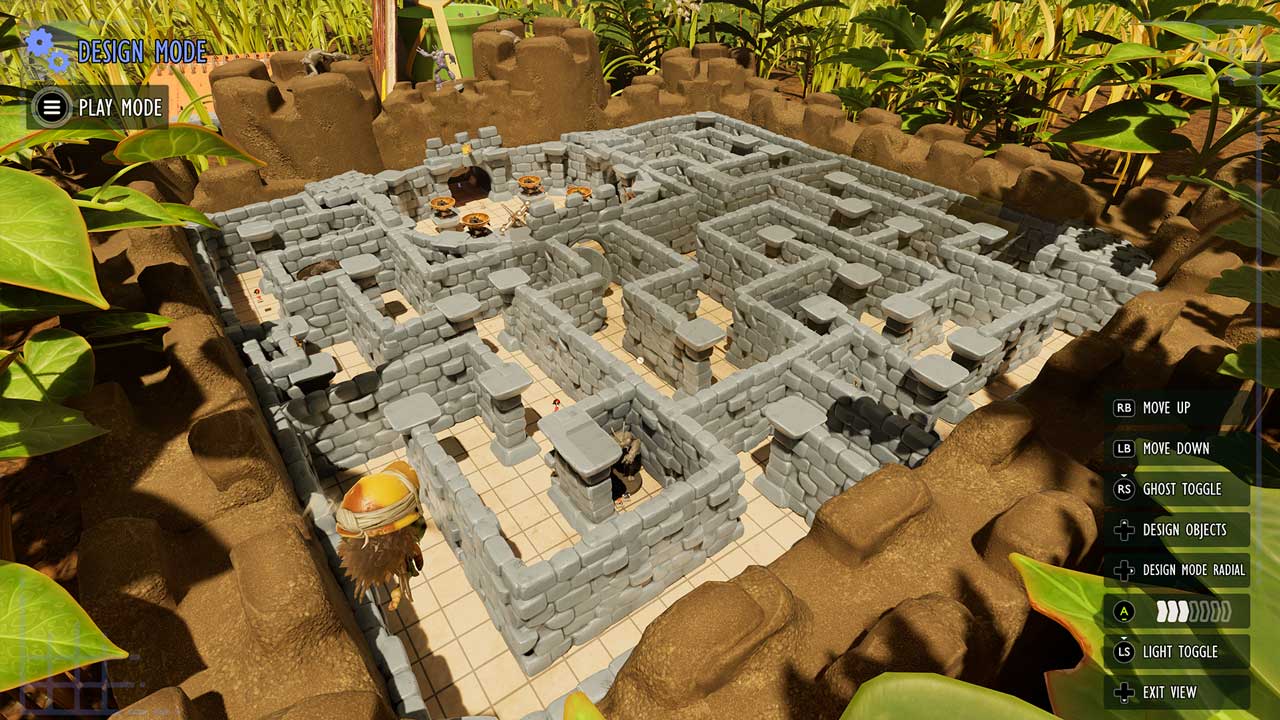
Playgrounds supports dedicated creation maps and tools such as the Handy Gnat, letting creators place and organise structures in ways designed for authored experiences rather than ordinary Survival progression. [S43]
Trigger Volumes, Random Chance tools and linked gizmos allow events to happen because a player enters an area or because a logic condition resolves, moving Playgrounds beyond decorative sandbox building. [S17]
Creature Spawners, pathing tools and 0.5's dedicated MIX.R Creature Spawner/Wave Manager allow structured combat challenges rather than relying only on whatever creatures naturally inhabit the map. [S17] [S39]
Buggy Racing supports purpose-built race layouts with checkpoints and rule-driven competition for one to four players. It demonstrates the creator layer can produce activities rather than only custom survival spaces. [S18]
Playgrounds supports community upload/download and voting through the documented online account layer, giving the creator loop a distribution surface beyond the creator's own device. [S17] [S07]
Custom Game 1.0 is the current custom-settings package introduced with 0.5. Its “1.0” label belongs to the feature and must not be confused with Grounded 2's future product version 1.0. [S39]
Important boundary: a creature, object or behaviour available in Playgrounds does not automatically prove it exists naturally in current Survival Mode. Creator-mode availability and survival-world availability are separate questions.
Grounded 2 launched with a broad accessibility set. Current 0.5-era support material continues to reference some of those options directly, while others are best described as launch-confirmed rather than pretending every menu item has been independently revalidated on the latest patch.
The mode reduces spider-like visual characteristics through adjustable presentation rather than simply removing every spider encounter. It is launch-confirmed and still appears in current 0.5-era support/issue material. [S11] [S46]
Customisable subtitles remain represented in current 0.5-era support material. Colourblind options and Read to Me narration are confirmed in the launch accessibility baseline, but current 0.5-era material does not separately re-list every one of those settings. [S11] [S46]
Adjustable reticle and control settings were explicitly included at launch. Because Early Access menus can evolve, the in-game settings on the current platform remain the final check for the exact option set. [S11]
Game Director Chris Parker says PS5 support already includes DualSense haptic feedback and adaptive triggers, with further refinement intended during Early Access. [S15]
No first-party source currently establishes a Thalassophobia-specific mode for the underwater content. Community requests for one are not the same as an announced feature.
Game Preview; online and cross-platform features supported.
Xbox on PC uses Game Preview; Steam uses Early Access. Both sit inside the current cross-platform multiplayer footprint.
Early Access since Into the Abyss on 11 August 2026; DualSense haptics and adaptive triggers are developer-confirmed current features. [S15]
Official functional support was added with 0.4.1; that should not be conflated with the separate historical “Steam Deck Verified” roadmap wording. [S18]
PC technology: the December Feature Update moved the game to Unreal Engine 5.6.1 and added/updated PC upscaling support including DLSS and FSR. These are technical platform features rather than core survival mechanics. [S19]
Two Early Access platform boundaries: unlockable achievements/trophies are not live yet; Parker says they are planned for 1.0. Grounded 2 is also not yet established as PS5 Pro Enhanced; that is another stated 1.0 target rather than a current feature. [S15]
This catalogue is intentionally broader than the narrative sections above but stops short of becoming a recipe database, bestiary or mechanical stat guide. Most entries are directly supported on the current branch; where the latest available first-party material only confirms a launch accessibility option, the status says Launch-confirmed instead of implying fresh 0.5 revalidation.
Food, water, preparation, crafting and shelter remain baseline expedition concerns. [S13]
Zoom, observation, compass/marker support, Chopping List and Resource Finder integration. [S19]
Discovery/research feeds recipe progression, including current Brainpower-exclusive unlocks. [S39]
Lets players inspect ingredients and required tools while away from a workstation. [S39]
Hidden collectible layer spread around Brookhollow Park. [S39]
Exploration-linked player progression, separate from Moldy Milk Molars used for Buggies. [S38]
Spendable progression resource with current uses including extension of the PTS fast-travel network. [S39]
General-purpose gathering, hauling, building and combat companion. [S38]
Combat/control-focused companion with web identity and later gliding capability. [S38] [S40]
Tank/support companion with healing, ram and water-based utility. [S20]
Later ant-family Buggy with its own role rather than an automatic replacement ladder. [S21]
Amphibious companion for land and water exploration. [S06]
Moldy Milk Molars, mutations and tier progression support long-term companion development. [S40]
Quick-access inventory functionality added as Buggy logistics matured. [S34]
Structured Playgrounds racing for one to four players. [S18]
Large layered survival world expanded through Garden, anthill and aquatic regions. [S12]
Toxic Tangle introduced a sour, experiment-linked corruption affecting parts of the environment and creature ecology. [S20]
Agile aquatic movement, including directional Burst. [S39]
Equipment-gated deeper-water exploration linked to Optical Discs. [S06]
Underwater harvesting branch of the Omni-Tool. [S06]
Fixed Ominent fast-travel infrastructure with a wider current network. [S39]
Player-built transport routes with bidirectional ZIP.R support. [S39]
Grid-led construction workflow introduced in 0.2. [S34]
Decoration-linked perks plus current dynamic home-music feedback. [S19] [S39]
Bubble Floors, Bubble Diffuser and aquatic structures support submerged habitation. [S39]
Hatching, housing and progression utilities integrate companions into the base loop. [S40]
Special station for additional Mysterious Stranger-related crafting. [S39]
Cosmetic customisation station for SCA.B 2K and Omni-Tool presentation. [S39]
Warrior/Ranger/Mage/Rogue language describes flexible build directions rather than locked classes. [S38]
Active and passive mutation layers reinforce equipment and playstyle. [S20] [S39]
Fight while mounted or dismount and let the Buggy participate independently. [S38]
Dedicated targeting and aquatic weapon options. [S39]
Player actions can escalate Stranger attention into O.R.C. retaliation. [S39]
Repeatable defence challenges that also interact with Stranger pressure. [S39]
Lets the player deliberately summon controlled-creature wave encounters. [S39]
Large encounters include AXL, King Dozer, Snake Colossus and enhanced current variants. [S34] [S20] [S21]
Shared survival for up to four total players. [S35]
Xbox, PC and PlayStation crossplay through the documented account layer. [S07]
Cloud-shared world model available through current cross-platform support. [S07]
Chris Parker confirms PC/Xbox/PlayStation cross-progression; support docs do not yet document every edge case. [S15]
Xbox-console ↔ Xbox-PC purchase/save continuity is explicitly supported. [S11]
Custom-experience creation and community distribution. [S17]
Creator-focused construction tool for precise placement and hard-to-reach positions. [S43]
Trigger Volumes, Random Chance and Creature Spawners support scripted experiences. [S17]
0.5 adds dedicated creature/wave tools for authored MIX.R events. [S39]
Current rule/settings customisation package; unrelated to product version 1.0. [S39]
Adjustable reduction of spider-like visual characteristics; launch-confirmed and still represented in current 0.5-era support material. [S11] [S46]
Explicitly included in the launch accessibility baseline; not separately re-listed in the current 0.5-era sources. [S11]
Subtitle presentation can be adjusted; subtitle-related settings remain represented in current 0.5-era support material. [S11] [S46]
Explicitly included in the launch accessibility baseline; current 0.5-era sources do not separately re-list it. [S11]
Adjustable aiming/presentation and input options are confirmed in the launch baseline; exact current menus can evolve during Early Access. [S11]
Chris Parker says both are already supported on PS5, with refinement continuing through Early Access. [S15]
Catalogue scope: major delivered player-facing capabilities plus clearly labelled launch-confirmed accessibility options. It deliberately excludes every individual weapon, recipe, creature, building piece, mutation and collectible variant.
A feature can be live, announced, hidden on a roadmap, previously listed or merely requested by the community. Those states must not be collapsed.
Updates & Change History owns the full ledger. This condensed view shows only the major feature additions that changed the shape of the player experience.
Rideable companions, Brookhollow Park and the core survival/co-op loop establish the new baseline.
BUILD.M, AXL content, Hotpouch and quality-of-life work deepen the first version of the loop.
PEEP.R 2K, Resource Finder and Coziness make exploration and bases more legible/rewarding.
Toxic Tangle adds a major region, Ladybug Buggy, more creatures/building content and mutation changes.
Custom experiences, logic tools and community sharing create a second way to use the world and assets.
Moldy Milk Molars, mutations, Buffin' Barrel, Black Soldier Ant and Sinkhole content deepen companions and combat.
Buggy Racing turns Playgrounds into a structured activity; Steam Deck functional support also arrives.
Swimming 2.0, diving progression, underwater combat/building, Toe Biter, Stranger heat, ziplines and expanded creator tools make Into the Abyss the largest feature jump so far.
Obsidian has also moved feature work between roadmap buckets and introduced Feature Updates to ship systems outside the next large content release. That history is why Sourceborne treats the roadmap as mutable intent rather than a fixed delivery contract.
The sequel is most distinctive where one feature solves several player problems at once.
At the start, distance, creatures, resources and unfamiliar geography make Brookhollow dangerous. Progress increasingly turns those constraints into systems the player can control: a Buggy carries the load; PEEP.R finds the resource; a zipline or PTS link shortens the route; a developed base becomes a staging hub; diving equipment turns inaccessible depth into a new region; and Shared Worlds allow a group to keep building that infrastructure together.
That sense of turning a hostile miniature park into an understood, connected place is the thread linking the best current features.
The feature descriptions above are anchored primarily to first-party Obsidian announcements, release notes, support documentation and Xbox publisher material. Direct developer interviews are used where current support documentation does not fully spell out an important boundary.
Current high-level gameplay, Early Access state and feature framing.
Open source ↗Brookhollow Park scale, setting and foundational sequel/Buggy framing.
Open source ↗Archetypes; Buggy riding, combat, gathering, naming/nesting, traversal and difficulty/recovery semantics.
Open source ↗Survival basics, early progression and Buggy gathering/hauling context.
Open source ↗Accessibility baseline, Xbox Play Anywhere and launch-era current-feature context.
Open source ↗BUILD.M, Hotpouch and early post-launch feature expansion.
Open source ↗PEEP.R 2K, Resource Finder, Coziness, engine and PC upscaling changes.
Open source ↗Garden expansion, Ladybug Buggy, creatures, mutation/building growth.
Open source ↗Black Soldier Ant Buggy, Buggy progression, Sinkhole Anthill and King Dozer-era feature expansion.
Open source ↗Moldy Milk Molars, Buggy mutations, Buffin' Barrel, combat and utility-building details.
Open source ↗Developer explanation of Buggy progression and keeping earlier companions useful.
Open source ↗Creator-mode logic tools, custom encounters and community sharing.
Open source ↗Handy Gnat, creator-map/building context and Playgrounds tooling.
Open source ↗Structured Buggy Racing, Playgrounds growth and Steam Deck functional support.
Open source ↗Pond/Abyss expansion, Swimming 2.0, Diving Suit progression, Omni-Clipper, underwater building and Toe Biter.
Open source ↗Detailed current feature state: underwater systems, Brainpower/Recipe Menu, PTS, Stranger heat, repeatable MIX.Rs, Custom Game 1.0 and Playgrounds expansion.
Open source ↗Pond expansion, Bayou/Mountains and the wider aquatic feature direction.
Open source ↗Current Molar, Buggy and Tier 4 Omni-Axe progression.
Open source ↗Earlier creature aggression/balance and progression-fix state.
Open source ↗Xbox/PC/PlayStation crossplay, Shared Worlds, Playgrounds account features and account requirements.
Open source ↗Developer statements on cross-progression, current DualSense haptics/adaptive triggers, the PS5 Pro Enhanced target, achievements/trophies for 1.0 and other development direction.
Open source ↗Supports the up-to-four-player online co-op framing.
Open source ↗Online-only co-op/local-offline boundary, Xbox Play Anywhere and other retained narrow platform facts.
Open source ↗Defines Shared Worlds as cloud worlds designated friends can continue while the owner is offline; current Grounded 2 support confirms Shared Worlds but does not restate every original behaviour.
Open source ↗Used narrowly to confirm continued 0.5-era presence of Arachnophobia/subtitle-related settings and current support terminology; not used as a substitute for the release ledger.
Open source ↗Fall, Winter and undated plans; used only to distinguish current features from future intent.
Open source ↗Reviewed through 21 September 2026. Future roadmap material appears only to preserve current/future boundaries; it is not represented as live functionality.