Grounded 2 · World & locations

Brookhollow Park, explained

Brookhollow Park is not just a larger replacement for Grounded's backyard. It is a layered survival world in which ordinary public landmarks, creature-made spaces, hidden Ominent infrastructure and a growing underwater environment overlap. This guide explains the park as a connected place — what its major regions are, how they relate, why they matter, and which areas are current, historical or still planned.

Evidence baseline: 25 September 2026 · First-party world state rechecked: 25 September 2026 · Current playable world: Into the Abyss / 0.5 branch · Scope: stable regions, facilities and location classes with reconciled identities

At a glance

A municipal park operating at several scales at once

Grounded 2 is set in Brookhollow Park in 1992, two years after the first game. The core world is deliberately legible at human scale — statue, snackbar, garden, picnic areas, pond — but those landmarks become enormous survival territories at miniature scale, while Ominent's research network runs through and underneath them.

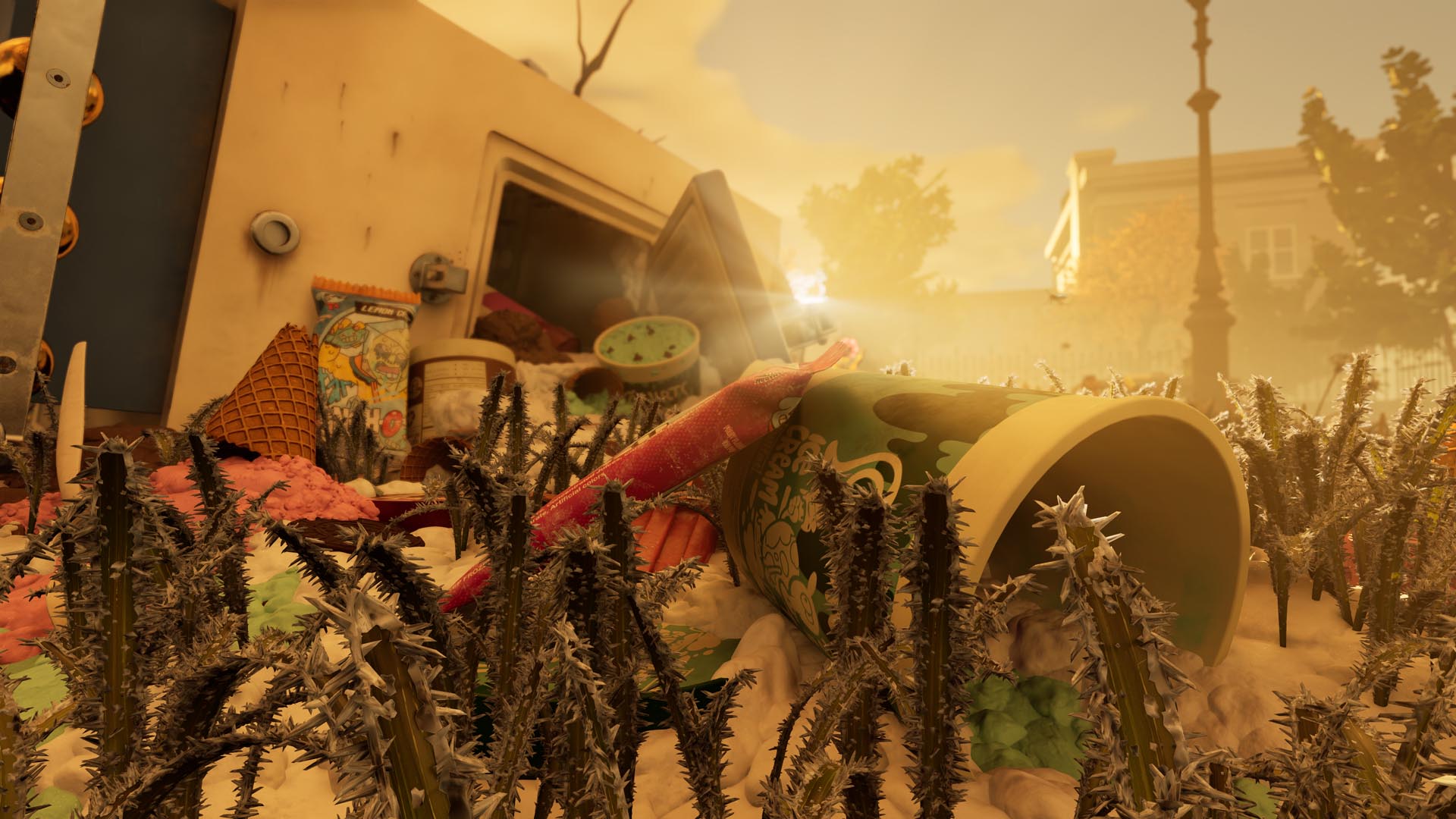
The Brookhollow Park ice cream cart and surrounding vegetation at miniature scale.
Brookhollow is most legible when ordinary park objects become terrain. The official announcement screenshot around the ice cream cart shows the human-scale park and miniature survival space in the same frame. Official image: Xbox Wire / Microsoft ↗
Human-scale landmarks

Entrance, Snackbar, Statue, Ceremony Area, Pine Hill, Fire Pit, Picnic Table and other recognisable park features give the miniature world a readable top-level geography. P02 G03

Regional expansions

The Garden Patch, Sinkhole Anthill and Pond/Abyss branch materially enlarged the playable world during Early Access rather than merely adding new mechanics. P06 P09 P12

Hidden institutional layer

Onboarding, Network Center, Field Archives, Monitoring, candy-processing, O.G.R.R. and Raw Science facilities make the park a distributed research complex as well as a public space. G01 G09

Vertical and creature-made spaces

Anthills and the underwater Pond/Abyss complex behave as worlds within the park, with their own entrances, environmental identity and progression significance.

Scope: this page explains stable regions, facilities, environmental identity and relationships. It is not an exhaustive POI catalogue: exact coordinates, shortest routes, collectibles, resource pins and minor patch-note place labels are excluded unless their identity and relationship to the wider park are clear.

World model

Five layers explain why Brookhollow feels larger than a map

These five layers are an editorial model for understanding the park, not official in-game zoning. They explain why the same patch of park can simultaneously be a public landmark, a survival region, a research site and part of the story.

Layer 01

Public park geography

Human-scale features — entrances, a snackbar, statue, ceremony grounds, picnic areas, garden structures and pond — anchor orientation and give miniature exploration its sense of scale.

Layer 02

Miniature survival regions

At insect scale, those landmarks break into distinct terrain: Garden subregions, bark, vegetation, water margins, elevated structures and enclosed spaces that function as separate exploration environments.

Layer 03

Biological geography

Anthills, dens and aquatic spaces are not incidental caves. They are named, differentiated environments with their own access points and progression or research context.

Layer 04

Ominent infrastructure

Facilities, checkpoints, labs, archives, ranger sites and reservoir infrastructure create a second institutional map hidden inside the public one.

Layer 05

Early Access expansion frontier

The park is still changing. Garden, Sinkhole Anthill and Pond/Abyss are delivered expansions; Rotting Wood Pile is explicitly planned and therefore kept outside current playable geography.

Orientation

How to read Brookhollow without a coordinate map

The useful question is not “where is every pin?” but “what kind of place am I looking at, what larger area does it belong to, and what role does it play in the park?”

Regional scale

Start with the large landmark

Names such as Garden Patch, Pond, Statue Area and Snackbar Front describe the broadest useful reader-facing spaces. They are the best anchors for understanding where smaller sites fit.

  • Garden Patch contains several distinct garden subregions.
  • Pond contains or connects to the deeper aquatic geography.
  • Statue Area provides context for checkpoint/network infrastructure.
Subregion scale

Then distinguish the spaces inside it

Croquet Court, Veggie Garden, Greenhouse and Pumpkin Patch should not be flattened into “the Garden”. They have separate names and relationships, even where the available evidence does not establish exact borders.

Facility scale

Facilities can sit inside regions without being regions

Candy Processing Facility belongs in the Veggie Garden context; O.G.R.R. Labs belong to the Pumpkin Patch/Scarecrow cluster; Statue Checkpoint is not interchangeable with Statue Area.

Status scale

Not every named place has the same public status

Most entries here describe current named locations. Monitoring Station and Raw Science Reservoir are known through in-world records rather than treated as ordinary open-world regions, while Rotting Wood Pile remains an official future plan.

Playable geography

The major regions of the current park

Brookhollow is best understood as a set of large regional identities plus smaller named spaces inside and between them. The descriptions below explain their role and relationships without claiming exact boundaries or routing.

CurrentCore park

Entrance, Snackbar, Statue and the launch-era surface park

The original park footprint is built from recognisable municipal-park landmarks rather than a single named biome. Entrance Area, Snackbar Front Area, Statue Area, Ceremony Area, Pine Hill, Fire Pit, Picnic Table Area and Ice Cream Cart Surroundings remain distinct named areas in the available evidence.

The important spatial pattern is that public landmarks and Ominent infrastructure overlap. Snackbar Front contains the secret Onboarding Facility; Statue Area includes the Statue Checkpoint and provides network-story context; the Ceremony Area is a public-facing site with major narrative significance. Pine Hill, Fire Pit and the picnic area are not just background scenery: they are named field regions used by the game's location and encounter model.

P02 G03 G08 G10

CurrentToxic Tangle / 0.3

Garden Patch: a region made of four different spaces

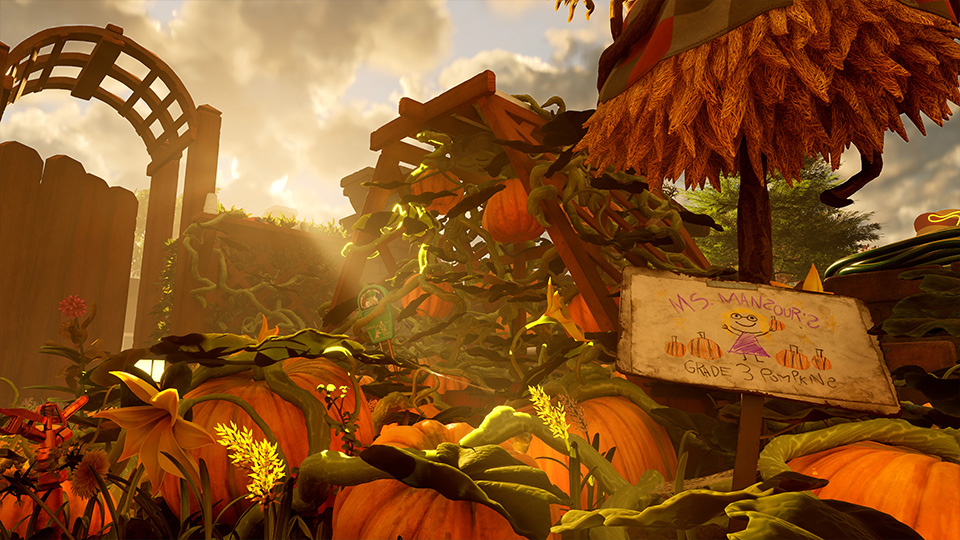
The Toxic Tangle did not add a generic “garden level”. It expanded Brookhollow with a Garden Patch whose internal geography is explicitly named: Croquet Court, Veggie Garden, Greenhouse and Pumpkin Patch. Obsidian's first-party material describes the Greenhouse as overgrown with twisting paths and hidden crawlspaces, reinforcing that these are exploration spaces rather than decorative labels.

  • Croquet Court is a distinct Garden subregion and appears in the retained records near War-Torn Anthill.
  • Veggie Garden contains the Candy Processing Facility, tying visible garden geography to flavour/candy research.
  • Greenhouse is both a recognisable human structure and a miniature traversal environment.
  • Pumpkin Patch contains O.G.R.R. Labs and a Ranger Outpost and connects into the Scarecrow research cluster.

The older Community Garden wording remains resolvable as a historical/in-world regional label, but it is not mechanically substituted for every Garden Patch reference. P06 G04 G09

The Garden Patch and Pumpkin Patch environment introduced in The Toxic Tangle update.
The Garden Patch is visibly its own regional identity. The Pumpkin Patch imagery illustrates the expansion’s dense vegetation and human-scale garden structures without pretending to define exact in-game borders.Official image: Obsidian Entertainment ↗
CurrentBeat the Heat / 0.4

Sinkhole Anthill: expansion through depth rather than acreage

Beat the Heat added Sinkhole Anthill as a new point-of-interest landmark and anthill. Its significance is architectural as much as numerical: Grounded 2 can expand Brookhollow by adding deep creature-made environments inside the existing park footprint, not only by pushing the surface boundary outward.

The delivered name Sinkhole Anthill is used for the current world. Earlier roadmap concepts are not treated as aliases unless evidence explicitly connects them. P09 P10

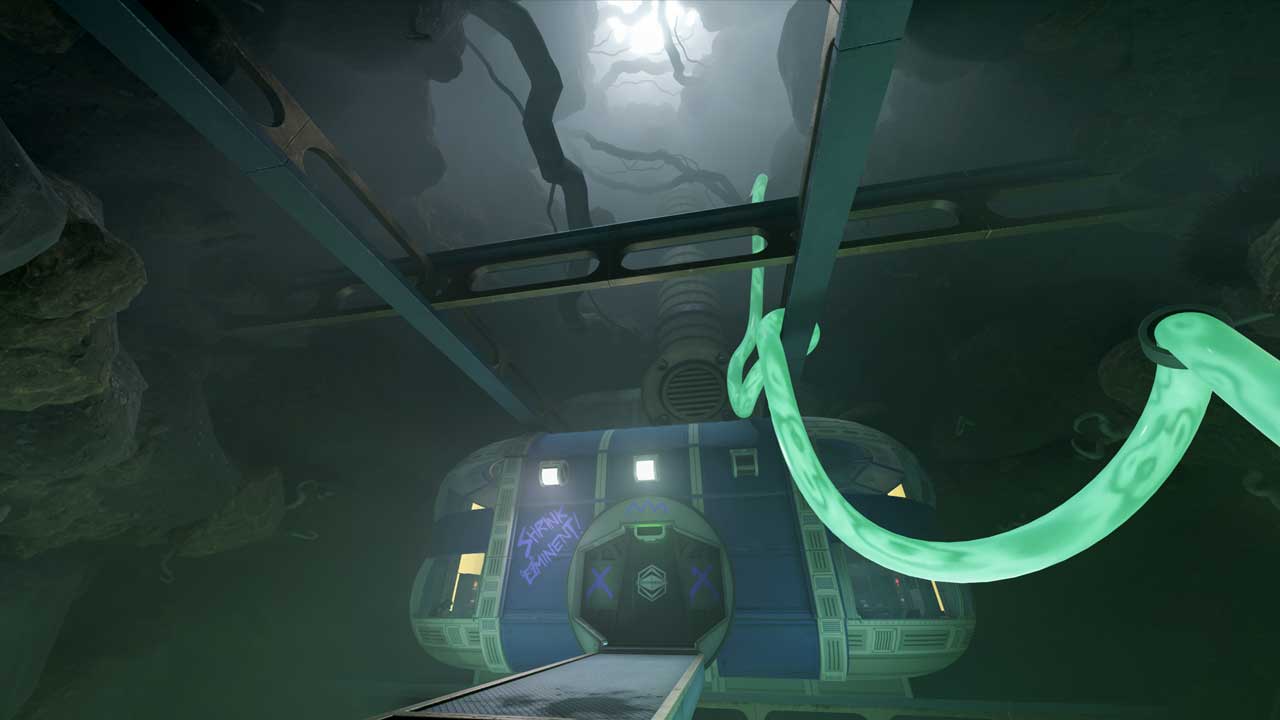
An Ominent structure inside the dark Sinkhole Anthill environment.
Sinkhole Anthill expands Brookhollow vertically. The official image shows how Ominent infrastructure and creature-made underground space can occupy the same location layer.Official image: Obsidian Entertainment ↗
CurrentInto the Abyss / 0.5

Pond and Skunk Pond: the gateway to a vertical world

The Pond was always one of Brookhollow Park's largest visible landmarks; Into the Abyss made it a major playable geography above and below the surface. The evidence distinguishes the broad Pond location from Skunk Pond, a named story/quest surface in the current narrative.

This distinction matters because “Pond content” is broader than the Skunk Pond quest. The current world also includes surrounding Bayou and Mountains regions, while deeper progression leads into The Abyss. P12 P13

CurrentDeep-water biome

The Abyss: Brookhollow's deepest current biome

The Abyss is the deep underwater area below the Pond, not shorthand for the entire 0.5 update. Its addition changes Brookhollow from a predominantly surface-and-tunnel world into one with a substantial vertical aquatic layer.

The surrounding world-state records also connect this branch to Raw Science Reservoir infrastructure and other underwater research evidence. Those records establish that Ominent's hidden geography extends beneath the visible park, but they do not establish the reservoir's ultimate origin or causal responsibility for unrelated events. P12 P30 G01

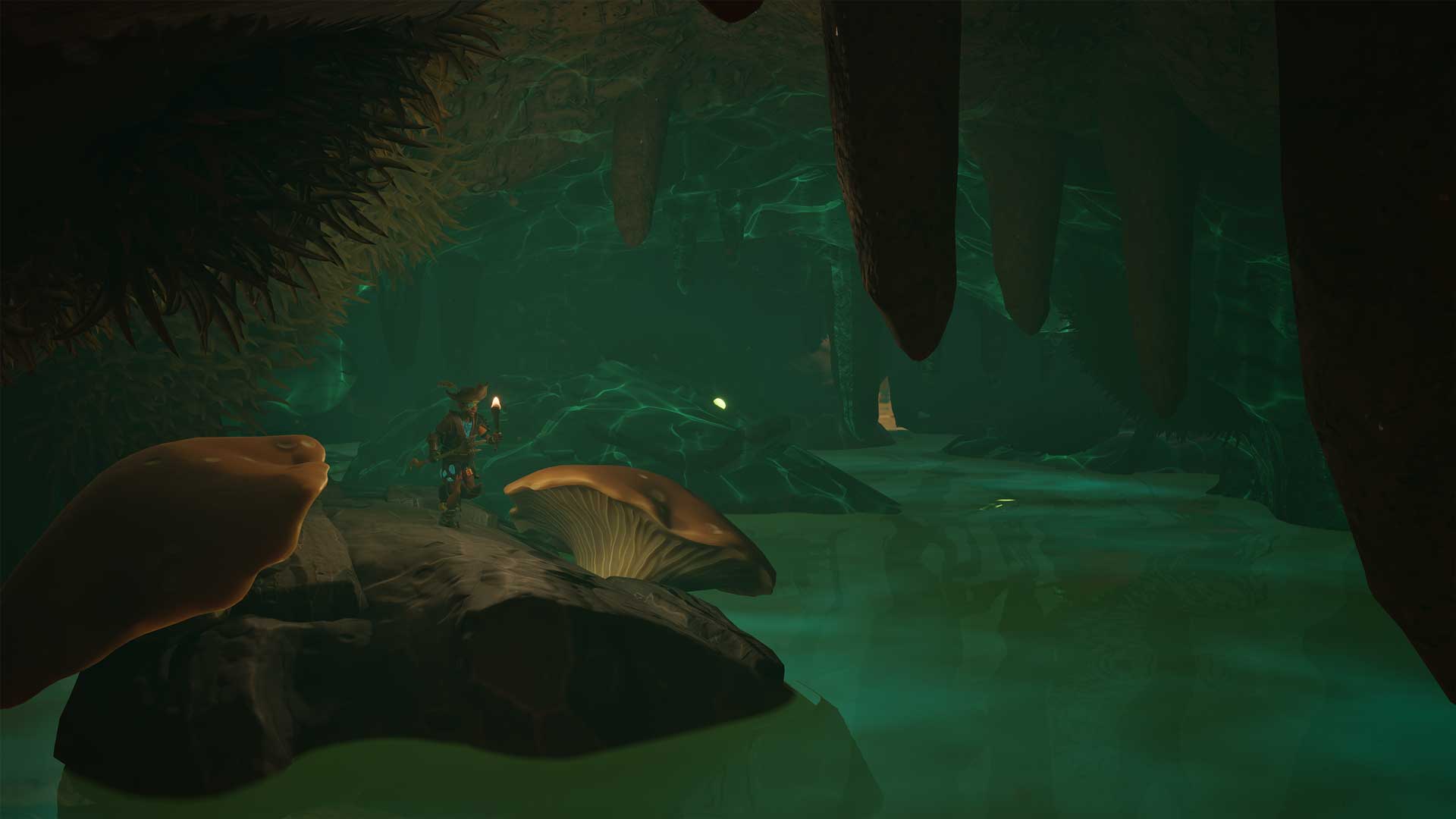
A shrunken teen exploring a dark cave and water environment shown in the official Into the Abyss reveal.
Into the Abyss adds enclosed subterranean and aquatic spaces as well as open water. This official reveal screenshot gives in-engine environmental context for the Pond/Abyss branch without being used to infer an exact map boundary. Official image: Obsidian Entertainment ↗
CurrentAbyss-era surface

Bayou, Mountains and Gnarly Bark

Into the Abyss also expands the world around the water rather than treating the Pond as an isolated dungeon. Bayou and Mountains are named surrounding regions; Gnarly Bark is a current Abyss-era park area with a separately registered Gnarly Bark Outpost.

That separation — region versus outpost — is deliberate. It keeps the region distinct from the facility rather than collapsing every named site into the area around it. P13 P15

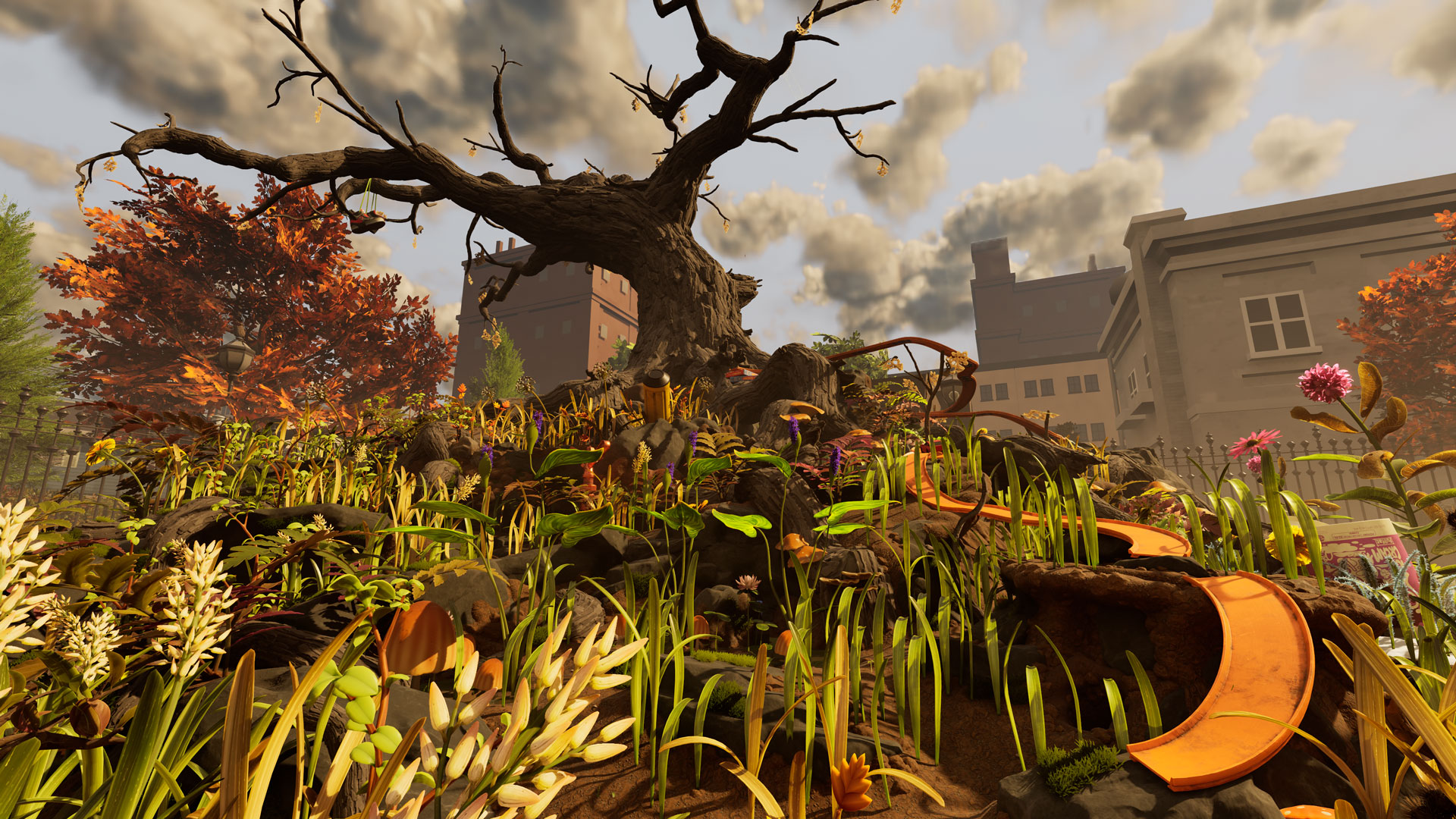
Gnarly Bark in Brookhollow Park, with a vast dead tree rising above miniature paths and vegetation.
Gnarly Bark shows how ordinary park features become regions at miniature scale. The dead tree dominates the surrounding terrain while park buildings remain visible at human scale beyond it.Official image: Obsidian Entertainment ↗
Spatial relationships

The useful connections between named places

The evidence does not support a route-planning graph, but it does establish enough parent/child and association relationships to explain how the park hangs together.

Snackbar cluster

Snackbar Front → Onboarding Facility

Snackbar Front Area contains the Ominent Onboarding Facility, while Snackbar Anthill is a separate biological location in the same broad named context.

Statue cluster

Statue Area → Checkpoint → Network operations

Statue Area contains the Statue Checkpoint and provides location context for Network Center access. Ceremony Area is related but not identical to Statue Area.

Garden cluster

Garden Patch → four subregions

Croquet Court, Veggie Garden, Greenhouse and Pumpkin Patch are distinct named subregions. Veggie Garden contains Candy Processing; Pumpkin Patch contains O.G.R.R. Labs and connects toward the Scarecrow complex.

Anthill network

Multiple anthills, not one ant biome

Hatchery, Snackbar, War-Torn, Spider Den and Sinkhole Anthills remain separate because they have different names, contexts, entrances and progression significance.

Pond cluster

Pond → Skunk Pond / Abyss branch

Pond is the broad water landmark; Skunk Pond is a named story surface; The Abyss is the deep biome below. Bayou and Mountains are surrounding regions rather than synonyms for the Pond.

Gnarly Bark cluster

Gnarly Bark → Gnarly Bark Outpost

The current region and its Ranger Outpost are separately tracked, demonstrating the distinction between world region and facility instance.

Important: these are documented relationships, not promises about the shortest in-game route, exact border, elevation or traversal requirement.

Hidden infrastructure

Ominent built a second geography inside the public park

Brookhollow's most important world-building distinction is that Ominent's facilities are distributed across the park rather than concentrated in one laboratory complex. The network spans training, communications, archives, field monitoring, flavour research, genetic research and Raw Science infrastructure.

Current facilities

Onboarding, Network Center and Field Archives form different institutional roles

Ominent Onboarding Facility, hidden in the Snackbar Front context, is a miniature training/start facility — not Ominent headquarters. Network Center is a major network and communications facility with documented Levels 01–05 and a Stranger-arena relationship. Ominent Field Archives stores field records and assets and is explicitly distinct from the Monitoring Station.

Keeping these roles separate matters because “Ominent facility” is not one place. The Park Project is spatially distributed. G10 G01 G13

Garden research cluster

Candy Processing, O.G.R.R. Labs and Scarecrow

The Garden Patch contains a particularly dense research geography. The Candy Processing Facility sits in the Veggie Garden and is associated with super-sour/flavour research. O.G.R.R. Labs sit in the Pumpkin Patch and belong to Ominent's Genetic Recombination Research programme. The Scarecrow is both a landmark and a structure containing research spaces, with Scarecrow Entrance retained separately.

These relationships let the world tell a spatial story: garden research is spread across visible subregions and concealed infrastructure rather than confined to one “lab biome”. G09 G04 G03

In-world record

Monitoring Station and Raw Science Reservoir are deliberately bounded

Monitoring Station is referenced as a Park Project monitoring/relay facility but is not used as an alias for Network Center. Raw Science Reservoir is an in-world-record research infrastructure site associated with Raw Science instability, underwater monitoring and evacuation-era material.

These records establish that the places exist in the story world without pretending the available evidence fully characterises them as ordinary open-world regions. G01

Statue Area

Statue Checkpoint

A separate Ominent checkpoint near statue/network operations. It is neither the entire Statue Area nor the Network Center itself.

G01
Park field network

Ranger Outposts

A facility class with multiple instances across Brookhollow. Gnarly Bark Outpost is separately named; records also tie outposts to regions including Pine Hill, Pumpkin Patch and Veggie Garden.

P06 G03 P15
Stranger / O.R.C. layer

O.R.C. caves

A cave/stash class associated with the Stranger and O.R.C. equipment. The available records do not establish that every O.R.C. cave reference describes one unique cave.

G01
Biological & field network

Anthills, outposts and checkpoints form a second navigation vocabulary

At miniature scale, animal-made spaces and field infrastructure are substantial enough to need their own names. They remain separate because their relationships and roles differ even when they share the same broad park region.

Buggy progression context

Hatchery Anthill

Connected to Buggy egg/hatchery progression and represented with north/south entrance relationships. It must remain distinct from the player-buildable Hatchery system.

G01
Snackbar region

Snackbar Anthill

A separately named anthill used in park research/scouting records. Its proximity or shared early-game context does not make it another name for Hatchery Anthill.

G01
Near Croquet Court

War-Torn Anthill

A 1992 scouting-record location near Croquet Court. The register deliberately does not infer an O.R.C. relationship merely from its name or condition.

G01
Current named site

Spider Den Anthill

A current park anthill/location whose unusual name is preserved exactly rather than normalised into a generic spider-den label.

G03
Beat the Heat / 0.4

Sinkhole Anthill

A delivered anthill and point-of-interest expansion. It demonstrates that major world growth can happen downward inside the existing park footprint rather than only at the edge of the map.

P09 P10
Field infrastructure

Ranger Outposts & stations

Ranger Outpost is a facility class, Gnarly Bark Outpost is a named instance, and Pergola Ranger Station retains a different facility label. A Ranger Station is not automatically treated as the same thing as a Ranger Outpost.

P15 G03
Park Project geography

The hidden map also has a 1992 history

Lore owns the full institutional story, but several dated records materially explain why these places belong in a world reference: they show Ominent treating Brookhollow as one distributed research environment.

25 May 1992
Park Project described as whole-park research

Sloane Beaumont's orientation material describes research in and under Brookhollow Park, establishing the Park Project as broader than a single facility. G01

23 Jul 1992
Field Archives access already affected by mystery gunk

Staff records place environmental problems around a named Ominent facility before the later public update chronology. This is useful place-history, not proof of the gunk's ultimate cause. G13

15 Sep 1992
Network Center, Field Archives and Monitoring Station oriented as separate facilities

Ominent orientation records distinguish communications, archive and monitoring functions rather than describing one generic underground lab. G01

16 Oct 1992
Project Key Lime warning anchors later Garden/Archive activity

A Garden-team warning shows the research geography still active shortly before the ceremony. This page keeps the location implication while leaving the full project interpretation to Lore. G01

0.5-era records
Underwater research infrastructure extends the hidden park below the Pond

Raw Science Reservoir and evacuation/monitoring records materially extend Ominent's geographic footprint beneath the surface. G01

Spatial evolution

How Early Access has changed the physical shape of Brookhollow

0.5.1 corrects map/location presentation without expanding the playable world. The patch fixes map alignment for the Abyss and corrects the map unlock location for Ranger Outpost: Pergola. These are map/location fixes, not evidence of a new region. [P51]

Updates and Timeline own the complete release chronology. Here the focus is narrower: which milestones materially changed the geography players could inhabit.

8 Jun 2025
Brookhollow Park revealed

Announcement material establishes the 1992 setting and says the starting playable zone was already close to the scale of Grounded's entire backyard. P02

29 Jul 2025
Initial Early Access park opens

The launch footprint establishes the core public-landmark and hidden-infrastructure model, but the world is explicitly unfinished and expected to grow through Early Access. P01

27 Jan 2026
The Toxic Tangle adds the Garden Patch

Croquet Court, Veggie Garden, Greenhouse and Pumpkin Patch become established current subregions, while Ominent's Garden research footprint becomes much more visible. P06

13–14 Apr 2026
Beat the Heat adds Sinkhole Anthill

The live park gains a new point-of-interest anthill, reinforcing vertical/biological expansion inside Brookhollow rather than only outward surface expansion. P09 P10

11 Aug 2026
Into the Abyss opens the Pond as a full world layer

Pond, Skunk Pond, The Abyss, Bayou, Mountains and associated Gnarly Bark content transform the park around above-water, shoreline and deep-water geography. P12 P13 P30

Fall 2026
Rotting Wood Pile remains planned

The current roadmap names it as a future park area. It remains outside the playable-world sections until release evidence establishes that it has shipped. P18

Semantic boundaries

World names that should not be collapsed

A reliable world reference is partly about preserving distinctions. Casual discussion, update titles and planning labels often use similar words for different things.

Garden Patch ≠ every Community Garden reference

Garden Patch is the current official expansion-region identity. Community Garden remains a meaningful historical/in-world label, but one should not be substituted mechanically for the other.

Pond ≠ Skunk Pond ≠ The Abyss

Pond is the broad water landmark; Skunk Pond is a named story/quest surface; The Abyss is the deep underwater biome below the Pond.

The Abyss ≠ Into the Abyss

The Abyss is a place. Into the Abyss is the 0.5 update title. Search, linking and chronology depend on preserving that distinction.

Scarecrow ≠ Scarecrow Entrance

The landmark/structure and its specific entrance are separate records even though one belongs to the other.

Hatchery Anthill ≠ Hatchery system

One is a named biological location; the other is a player-facing Buggy/building system. Shared wording does not make them the same entity.

Ranger Outpost ≠ every station or named outpost

Ranger Outpost is a facility class. Gnarly Bark Outpost is a named instance; Pergola Ranger Station keeps its own facility terminology.

Monitoring Station ≠ Network Center

Both belong to Ominent's Park Project geography, but The retained records keep monitoring/relay and network/communications functions separate.

Rotting Wood Pile is future, not current

It is first-party roadmap geography. No datamine or expectation should move it into the playable-world section before release evidence changes.

Reference index

Named world & location reference

The entries below are stable regions, facilities and location classes retained for public reference. The index is intentionally selective rather than pretending every minor POI or patch-note place label has already been reliably reconciled.

Park regions & landmarks

Brookhollow Park

Current

Primary Grounded 2 setting.

Also used: Brookhollow municipal park; the Park

Contains: all current park regions

Ceremony Area

Current

Public ceremony site central to Grounded 2 inciting event.

Also used: ceremony; statue unveiling area

Associated with: Statue Area

Statue Area

Current

Park region around ceremony/statue infrastructure.

Also used: Statue

Contains: Statue Checkpoint, Network Center access

Garden Patch

Current

Official Toxic Tangle name/marketing region for garden expansion.

Also used: Garden; Garden biome

Contains: Croquet Court, Veggie Garden, Greenhouse, Pumpkin Patch

Community Garden

Current · historical label

In-world/roadmap regional wording overlapping the garden expansion.

Also used: community garden

related to: Garden Patch

Croquet Court

Current

Garden-area subregion; Snake Colossus territory.

Part of: Garden Patch

Veggie Garden

Current

Garden-area subregion containing Candy Processing Facility.

Part of: Garden Patch

Greenhouse

Current

Garden-area greenhouse region.

Part of: Garden Patch

Pumpkin Patch

Current

Garden-area subregion containing O.G.R.R. Labs and Ranger Outpost.

Part of: Garden Patch

Snackbar Front Area

Current

Park region containing Onboarding Facility/O.R.C. cave content.

Also used: Snackbar Front

Contains: Ominent Onboarding Facility

Pine Hill

Current

Park region and Ranger Outpost location.

Located in: Brookhollow Park

Fire Pit

Current

Park region with Ranger Outpost and O.R.C. encounters.

Located in: Brookhollow Park

Picnic Table Area

Current

Park area referenced in O.G.R.R. spawning/content.

Also used: picnic area

Located in: Brookhollow Park

Ice Cream Cart Surroundings

Current

Named park region.

Located in: Brookhollow Park

Entrance Area

Current

Main park entrance region.

Located in: Brookhollow Park

Pond

Current

Major water landmark opened in Into the Abyss.

Also used: the pond

Contains: Abyss approaches, aquatic content

Skunk Pond

Current

Named quest/story surface associated with Into the Abyss progression.

Part of: Pond/Abyss content

The Abyss

Current

Deep underwater area below Pond.

Also used: Abyss

Part of: Pond

Bayou

Current

Into the Abyss surrounding area.

Also used: The Bayou

Near: Pond/Abyss

Mountains

Current

Into the Abyss surrounding area.

Also used: The Mountains

Near: Pond/Abyss

Gnarly Bark

Current

Into the Abyss-era park area containing outpost/progression.

Contains: Gnarly Bark Outpost

Rotting Wood Pile

Planned

Planned for: Fall 2026
Anthills & field access

Sinkhole Anthill

Current

Anthill/POI added with Beat the Heat.

Located in: Brookhollow Park

Hatchery Anthill

Current

Anthill connected to Buggy egg/hatchery progression.

Includes: North/South entrances

Snackbar Anthill

Current

Anthill in Snackbar area used in park research/scouting.

Located in: Snackbar Front Area

War-Torn Anthill

Current

Anthill referenced in 1992 scouting records.

Near: Croquet Court

Spider Den Anthill

Current

Named current park anthill/location.

Located in: Brookhollow Park

Gnarly Bark Outpost

Current

Respawn/outpost point referenced in current patch.

Also used: Ranger Outpost: Gnarly Bark

Located in: Gnarly Bark

Pergola Ranger Station

Current

Named Ranger Station in current patch.

Located in: Brookhollow Park

Ranger Outpost

Current

Generic Ominent outpost class across park.

Also used: Ranger Outposts

Examples: Pine Hill, Pumpkin Patch, Veggie Garden, etc.

Ominent & research infrastructure

Ominent Onboarding Facility

Current

Secret miniature training/start facility.

Also used: Onboarding Facility

Located in: Snackbar Front Area

Network Center

Current

Major Ominent network/communications facility and story location.

Contains: Levels 01–05; Stranger arena

Ominent Field Archives

Current

Ominent archives facility storing field records/assets.

Also used: Field Archives

Part of: Park Project

Monitoring Station

In-world record

Park Project monitoring/relay facility referenced by Sloane.

Part of: Park Project

Candy Processing Facility

Current

Ominent lab researching super-sour/candy effects.

Located in: Veggie Garden

O.G.R.R. Labs

Current

Laboratory facilities for Ominent's Genetic Recombination Research.

Located in: Pumpkin Patch; Leads to: Scarecrow

Scarecrow

Current

Large park scarecrow containing Ominent research spaces.

Also used: Scarecrow Lab (informal/functional)

Contains: O.G.R.R. interaction/lab spaces

Scarecrow Entrance

Current

Entrance into Scarecrow research structure.

Part of: Scarecrow

Statue Checkpoint

Current

Ominent checkpoint near statue/network operations.

Located in: Statue Area

O.R.C. Cave

Current

Cave/stash location associated with Stranger and O.R.C. equipment.

Also used: O.R.C. cave

Associated with: Masked Stranger

Raw Science Reservoir

In-world record

0.5-era Ominent reservoir/underwater research infrastructure associated with Raw Science instability and evacuation.

Also used: reservoir

Associated with: Raw Science Research Division, SNPI-42Z, The Abyss

Current = established current location/region record. In-world record = explicitly present in shipped records but not necessarily treated here as a fully characterised standalone playable region. Planned = official future location, excluded from current geography.

Evidence

Sources used for this world reference

First-party announcements and update material anchor the live regional state. Released-game transcript/environment layers are used for facility terminology and relationships where Sourceborne has not yet retained a direct primary capture.

Primary current
P01 · Obsidian — Grounded 2 current site

Current setting/platform framing.

Open source ↗
Primary publisher
P02 · Xbox Wire — Grounded 2 announcement

1992 setting, Brookhollow Park and launch-world scale.

Open source ↗
Primary
P06 · Obsidian — The Toxic Tangle / 0.3

Garden expansion and Garden Patch terminology.

Open source ↗
Primary
P09 · Obsidian — Beat the Heat / 0.4

Sinkhole Anthill / park expansion.

Open source ↗
Primary forum
P10 · Obsidian Forum — Beat the Heat full notes

Beat the Heat location and encounter detail.

Open source ↗
Primary
P12 · Obsidian — Into the Abyss / 0.5

Pond, Abyss and current underwater expansion.

Open source ↗
Primary publisher
P13 · Xbox Wire — Into the Abyss reveal

Pond expansion, Mountains and Bayou.

Open source ↗
Primary current patch
Obsidian — Patch 0.5.1

Abyss map alignment and Ranger Outpost: Pergola map unlock location corrections.

Open source ↗
Primary previous patch
P15 · Obsidian — Patch 0.5.0.5

Historical Gnarly Bark/outpost and Pond-area state.

Open source ↗
Primary roadmap
P18 · Obsidian — current Year 2 roadmap image

Rotting Wood Pile as a planned Fall 2026 region.

Open source ↗
Primary forum/current branch
P30 · Obsidian Forum — Into the Abyss full notes

Detailed 0.5 world/progression changes.

Open source ↗
Released-game transcript layer
G01 · Grounded Wiki — Grounded 2 Data Items transcript index

In-world records and facility/location terminology.

Open source ↗
Released-game environment transcript layer
G03 · Grounded Wiki — Sites & Wonders (Grounded 2)

Current named site/location retrieval.

Open source ↗
Released-game environment transcript layer
G04 · Grounded Wiki — O.G.R.R. Labs

O.G.R.R. Labs location wording.

Open source ↗
Released-game environment transcript layer
G08 · Grounded Wiki — Ceremony Area

Ceremony site terminology and environmental context.

Open source ↗
Released-game environment transcript layer
G09 · Grounded Wiki — Candy Processing Facility

Candy Processing Facility location context.

Open source ↗
Released-game environment transcript layer
G10 · Grounded Wiki — Ominent Onboarding Facility

Onboarding Facility location/environment context.

Open source ↗
Released-game transcript layer
G13 · Grounded Wiki — The Archive / Ominent Field Archives quest transcript

Field Archives story/location context.

Open source ↗

Evidence baseline: 25 September 2026; selected first-party world-state sources rechecked 25 September 2026. No interactive map, coordinates, collectible pins or route database are included.

Follow Game